Key Points
- CGI Aerodynamic Vision: Automotive renderer and design advisor Brian Monaco of Monaco Auto Design (West Palm Beach, Florida) has published high-detail CGI renders converting Porsche’s newly teased Mission S concept into a track-focused “Mission RS”.
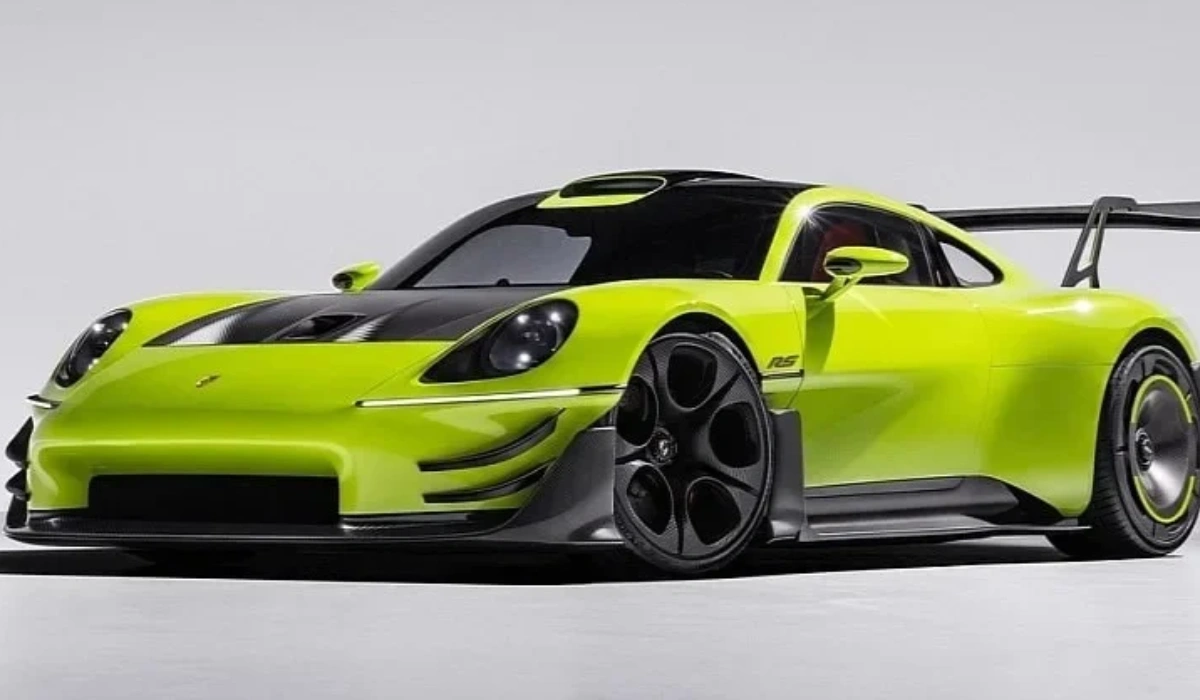
- Aerodynamic Upgrades: Monaco’s digital vision features a neon yellow paint scheme paired with an extensive exposed carbon-fibre aerodynamic package, including a revised front spoiler, dual bumper canards, carbon hood, roof, engine cover, rear wing, and rear carbon aerodisc wheels.
- New Corporate Masterplan: The design exercise follows Porsche’s formal announcement of its “Sportwagenschmiede 2035” business restructuring strategy, which seeks to streamline operations, cut roughly 9,000 jobs, and re-establish financial stability after slumping profits and declining sales in China.
- Future Product Roadmap: Under the new long-term roadmap, Porsche teased an upcoming internal combustion engine (ICE) mid-engine sports car positioned above the 911 series, an electric 718 successor with a mid-engine battery layout, an ICE Macan replacement codenamed “Project Octan”, and a flagship SUV positioned above the Cayenne.
- Launch Overlap and Market Distractions: Porsche’s official unveiling of the Mission S prototype faced intense media competition due to an overlapping product presentation by Tesla featuring its rocket-assisted Roadster prototype.
Monaco (Monaco Weekly News) October 24, 2026 — Following Porsche’s formal teaser of its new mid-engine Mission S prototype under the “Sportwagenschmiede 2035” masterplan, automotive designer Brian Monaco has unveiled a digital rendition titled the “Porsche Mission RS”. The West Palm Beach-based renderer has added track-focused carbon-fibre aerodynamics and lightweight body panels to Porsche’s concept preview. The CGI project arrives as Porsche navigates shifting market conditions, including EV adoption friction, lower profits in Asian markets, and restructuring initiatives aimed at introducing new internal combustion and electric sports cars over the coming decade.
- Key Points
- What Are the Key Design and Aerodynamic Features of the Digital Porsche Mission RS?
- What Financial and Market Pressures Prompted Porsche’s ‘Sportwagenschmiede 2035’ Strategy?
- What Vehicles Are Included in Porsche’s Upcoming Product Roadmap?
- How Did Competitive Launch Timelines Impact the Mission S Debut?
- Background of Porsche’s Mission Concept History and RS Heritage
- How This Development Could Impact Automotive Designers, Porsche Enthusiasts, and Market Analysts
As reported by Aurel Niculescu of autoevolution, automotive renderer and design advisor Brian Monaco of West Palm Beach, Florida (operating under Monaco Auto Design), has published a series of computer-generated imagery (CGI) concepts based on Porsche’s newly previewed Mission S prototype, re-imagining the vehicle as a track-focused supercar titled the “Porsche Mission RS”. Monaco’s digital concept focuses on aerodynamic optimization and weight reduction, applying an array of exposed carbon-fibre components over a vibrant neon yellow exterior finish to showcase how a high-performance production derivative could appear.
As reported by tuningblog.eu, the digital design exercise arrives in the wake of Porsche presenting its official Mission S preview concept to the international motoring press. The Mission S prototype was introduced as part of the Stuttgart-based automaker’s long-term business and restructuring strategy, titled “Sportwagenschmiede 2035”. While Porsche refrained from confirming technical specifications or powertrain details regarding the Mission S concept during its initial debut, the prototype previews an upcoming mid-engine sports car architecture designed to sit above the current 911 lineup.
What Are the Key Design and Aerodynamic Features of the Digital Porsche Mission RS?
As reported by Aurel Niculescu of autoevolution, the virtual transformation crafted by Brian Monaco introduces structural and surface aerodynamic modifications to Porsche’s baseline Mission S geometry. Rather than focusing on theoretical mechanical powertrains, Monaco Auto Design tailored the concept toward track-focused downforce generation and thermal management.
Key aesthetic and functional elements incorporated into the CGI Mission RS design include:
- Exposed Carbon-Fibre Aerodynamics: A extended carbon front splitter, double bumper-mounted canards, and integrated aerodynamic winglets positioned across both front and rear fascia elements.
- Lightweight Body Work: Replacement of standard body sections with exposed carbon-fibre panels across the front hood, roof structure, and rear engine cover.
- Downforce Elements: A massive rear wing mounted above a revised rear diffuser assembly.
- Specialised Wheel Assembly: Carbon-fibre wheels fitted with functional rear aerodisc covers designed to reduce turbulence around the rear wheel arches.
- RS Designation Branding: Distinctive ‘RS’ badging embedded on the trailing edge of the front fenders alongside a high-visibility neon yellow paint scheme.
What Financial and Market Pressures Prompted Porsche’s ‘Sportwagenschmiede 2035’ Strategy?
As reported by Aurel Niculescu of autoevolution, the presentation of the Mission S concept comes against the backdrop of significant market challenges for Porsche. The manufacturer has experienced declining sales volume in mainland China, lower overall global profit margins, and lower-than-anticipated commercial demand for newly introduced electric vehicles, such as the Macan Electric.
The economic transition away from traditional internal combustion engine (ICE) powertrains—including the market phase-out of ICE Macan variants and the petrol-powered 718 Boxster and Cayman models in major markets—contributed to revenue declines across several core regions.
In response to these operational pressures, Porsche leadership formulated the “Sportwagenschmiede 2035” corporate strategy. The multi-year plan involves significant cost-reduction measures—including the planned reduction of approximately 9,000 corporate and manufacturing roles—while reallocating capital toward a diversified product strategy that encompasses internal combustion, hybrid, and fully electric platforms.
What Vehicles Are Included in Porsche’s Upcoming Product Roadmap?
As reported by Aurel Niculescu of autoevolution, the “Sportwagenschmiede 2035” strategic framework outlines several upcoming vehicle developments spanning multiple segments:
As detailed by Carscoops, the development codenamed “Project Octan” represents a direct effort by Porsche to re-introduce gas-powered SUV options to sit alongside its current battery-electric SUV lineup, addressing persistent demand for combustion platforms in key global markets.
How Did Competitive Launch Timelines Impact the Mission S Debut?
As reported by Aurel Niculescu of autoevolution, Porsche’s official unveiling of the Mission S preview model coincided with a high-profile media presentation hosted by Tesla. The American electric vehicle manufacturer held an event showcasing its updated Tesla Roadster prototype, which featured experimental cold-gas thruster claims and revised release timelines.
The overlapping launch schedules resulted in widespread automotive media attention being diverted toward Tesla’s claims regarding its upcoming performance figures and unconventional design choices. Despite the media crowding, independent automotive designers and enthusiast communities have continued to focus on the Mission S, with independent creators like Monaco leveraging CGI software to highlight the production potential of Porsche’s physical prototype.
Background of Porsche’s Mission Concept History and RS Heritage
Porsche has long utilized the “Mission” nomenclature to preview seminal technological and design shifts within its lineup. In 2015, the brand debuted the Porsche Mission E concept at the Frankfurt Motor Show, a project that eventually materialized as the production Taycan EV in 2019. Similarly, the 2021 Porsche Mission R concept showcased lightweight electric customer racing technology, laying the technical foundation for the upcoming electric 718 Cayman and Boxster generation.
The “RS” designation—short for Rennsport (German for “racing sport”)—holds historic significance for the Zuffenhausen automaker. Historically reserved for homologation specials and extreme track-oriented variants, the RS badge has been applied to iconic models such as the 1973 911 Carrera RS 2.7, the 911 GT3 RS, and the mid-engine 718 Cayman GT4 RS. These vehicles traditionally incorporate aggressive aerodynamic aids, significant chassis stiffening, carbon-fibre body panels, and stripped-back interior layouts designed to maximize track performance.
How This Development Could Impact Automotive Designers, Porsche Enthusiasts, and Market Analysts
The combination of Porsche’s “Sportwagenschmiede 2035” announcements and independent design interpretations such as Brian Monaco’s Mission RS concept creates specific ripples across key automotive sectors:
1. Automotive Enthusiasts and Private Porsche Collectors
For brand loyalists and sports car collectors, Porsche’s explicit commitment to a new mid-engine, combustion-powered flagship sitting above the 911 provides reassurance that internal combustion performance remains central to the brand’s long-term portfolio. Digital concepts like the Mission RS fuel demand for high-downforce, naturally aspirated or twin-turbocharged track variants, indicating strong commercial appetite should Porsche choose to produce an ‘RS’ derivative of the Mission S.
2. Digital Car Creators and Aftermarket Tuning Specialists
Independent CGI concepts serve as early templates for aftermarket tuning companies and custom body kit manufacturers. Specialized tuning houses frequently monitor enthusiast engagement with digital renders—such as Monaco Auto Design’s aerodisc wheels and carbon canopy designs—to gauge commercial viability for developing real-world carbon-fibre body conversion kits once the base production vehicle enters the market.
3. Industry Analysts and Investors
For financial analysts monitoring Porsche’s corporate trajectory under “Sportwagenschmiede 2035”, the market’s reception to the Mission S highlights the delicate balance between brand heritage and electrification. Restructuring operations, re-introducing gas-powered alternatives like “Project Octan”, and developing high-margin flagship sports cars demonstrate a pragmatic pivot designed to stabilize profit margins across North American, European, and Asian markets.