Key Points
- Surging Transport Allocation: Monaco’s annual public transport allocation has climbed to approximately €25 million, representing over 1% of the total State budget following an upward adjustment of around €1 million.
- New Concession Framework Underway: The Prince’s Government is drafting specifications for a new concession contract for the Compagnie des Autobus de Monaco (CAM), with a dedicated concessions commission scheduled to convene before the end of November.
- Clash Over Passenger Metrics: National Council President Thomas Brezzo challenged Minister of Transport Céline Caron-Dagioni over passenger claims, noting that 2025’s projected 8.23 million passengers is comparable to the 7.6 million recorded in 2013, despite subsidies increasing 3.5 times over the same period.
- Route Expansion Drive: Transport Minister Caron-Dagioni attributed rising operational costs to substantial network expansion, including X-line routes to Le Portier and Monaco-Ville, with two additional routes scheduled for early 2027.
- Budget Section Defeated:National Council members formally rejected the public transport section of the budget in a parliamentary vote, recording 11 votes against, three abstentions, and three votes in favour.
Monaco (Monaco Weekly News) October 20, 2026 – Monaco’s annual public transport expenditure has reached approximately €25 million, accounting for more than 1% of the Principality’s overall State budget following a recent €1 million adjustment.The rising fiscal commitment has sparked sharp debate within the National Council, where elected lawmakers are challenging government officials over escalating operating subsidies, rider metrics, and overall fiscal management of the Compagnie des Autobus de Monaco (CAM). With the executive government currently preparing the specifications for a new CAM concession agreement, parliamentary tension culminated in National Council members formally voting down the public transport budget allocation.
- Key Points
- Why Are National Council Members Questioning Monaco’s Rising Public Transport Costs?
- What Is the Debate Surrounding Passenger Numbers and Government Subsidies?
- How Does the Government Plan to Expand Route Coverage in Monaco?
- What Is the Background of Monaco’s Public Transport Network and CAM Concession?
- How Will This Development Affect Monaco Residents, Commuters, and Transport Policy?
Why Are National Council Members Questioning Monaco’s Rising Public Transport Costs?
The dispute over public transport spending intensified during parliamentary budget discussions as elected officials scrutinised the growing cost of operating the Principality’s transit network.
As reported by Camille Esteve of Monaco Tribune, National Council member Christophe Brico drew direct attention to the magnitude of the fiscal commitment during assembly proceedings, noting that after a €1 million budget adjustment, public transport spending now stands at around €25 million annually, “representing more than 1% of the State budget.”
Against the background of broader government efforts to streamline public service concessions, Brico requested a comprehensive operational update regarding the future of the CAM concession agreement.
Responding on behalf of the executive, Minister of Transport Céline Caron-Dagioni confirmed that formal specifications are currently being drafted to govern the future of Monaco’s sole public transport operator.
As reported by Monaco Weekly News, Céline Caron-Dagioni stated:
“A concessions commission will also meet ‘before the end of November’ to set out the objectives for buses and bike-sharing services under the new agreement.”
What Is the Debate Surrounding Passenger Numbers and Government Subsidies?
A central point of contention between lawmakers and government ministers focuses on whether the steep rise in state subsidies has yielded a corresponding growth in public transit adoption.
National Council member Nathalie Amoratti-Blanc characterized the upcoming concession renewal as a “necessary overhaul,” pointing out that the CAM contract has been tacitly extended since 2020. Amoratti-Blanc again put forward the option of universal free public transport across the Principality, arguing that free access represents an “interesting option” for a territory characterised by short travel distances and severe road congestion.
Transport Minister Caron-Dagioni acknowledged that targeted free travel initiatives had proven “particularly effective” during major sporting and cultural events, while emphasizing that the government had consistently pushed CAM to expand its service coverage over recent years.
As reported by Monaco Weekly News, Céline Caron-Dagioni stated:
“Over the past three years, we have developed countless services, carried out trials with you on free bus travel, and challenged CAM to do more.”
Highlighting recent audit findings, Caron-Dagioni added:
“We expect 8.23 million bus passengers in 2025, representing a 7.5% increase compared with previous years. This figure shows that we haven’t been idle.”
However, those performance figures drew an immediate rebuttal from National Council President Thomas Brezzo, who argued that the government’s statistics lacked historical context.
As reported by Monaco Weekly News, Thomas Brezzo stated:
“Mr. Minister of State, you mentioned 7.4 million passengers, an 80% increase compared with 2020, in the midst of the COVID crisis. Your figures need to be put into perspective, as we already recorded 7.6 million passengers in 2013.”
Directly questioning the minister’s assertions, Thomas Brezzo added:
“So I’m not sure who you have convinced, Madame Caron, by talking about people who didn’t take the bus before.”
Brezzo went on to highlight the rapid growth of state payments to the transit operator, pointing out that the annual subsidy paid to CAM had risen from €6.5 million in 2013 to €22.9 million projected for 2025.
As reported by Monaco Weekly News, Thomas Brezzo remarked:
“For the same number of passengers, the budget is therefore 3.5 times higher. You don’t build a sustainable mobility policy by playing with figures.”
How Does the Government Plan to Expand Route Coverage in Monaco?
Despite challenging the underlying budget arithmetic, President Brezzo stressed that the National Council was not questioning the overall quality of service provided by CAM personnel.
Addressing the core drivers behind the cost increase, Minister Caron-Dagioni explained that operational expansion into new residential and commercial districts required higher financial commitments.
As reported by Monaco Weekly News, Céline Caron-Dagioni explained that costs had escalated:
“Because we have developed a significant number of routes, including the X routes and their extensions to areas such as Le Portier and Monaco-Ville.”
Caron-Dagioni further noted:
“By offering new services, we encourage people to use them. And today, rather than focusing on free travel, we are concentrating on providing services tailored to the needs of different districts.”
As part of this tailored strategy, the government confirmed that two new bus routes are scheduled for launch in early 2027: one connecting Monaco-Ville directly with Fontvieille, and a second line linking Jardin Exotique to Saint-Roman. Elected members of the National Council noted that the Monaco-Ville to Fontvieille connection was originally developed through parliamentary initiative.
Despite these operational explanations, parliamentarians expressed their disapproval of the current financial trajectory during the final budget vote. The public transport section of the budget was formally rejected by National Council members, receiving 11 votes against, three abstentions, and only three votes in favor.
What Is the Background of Monaco’s Public Transport Network and CAM Concession?
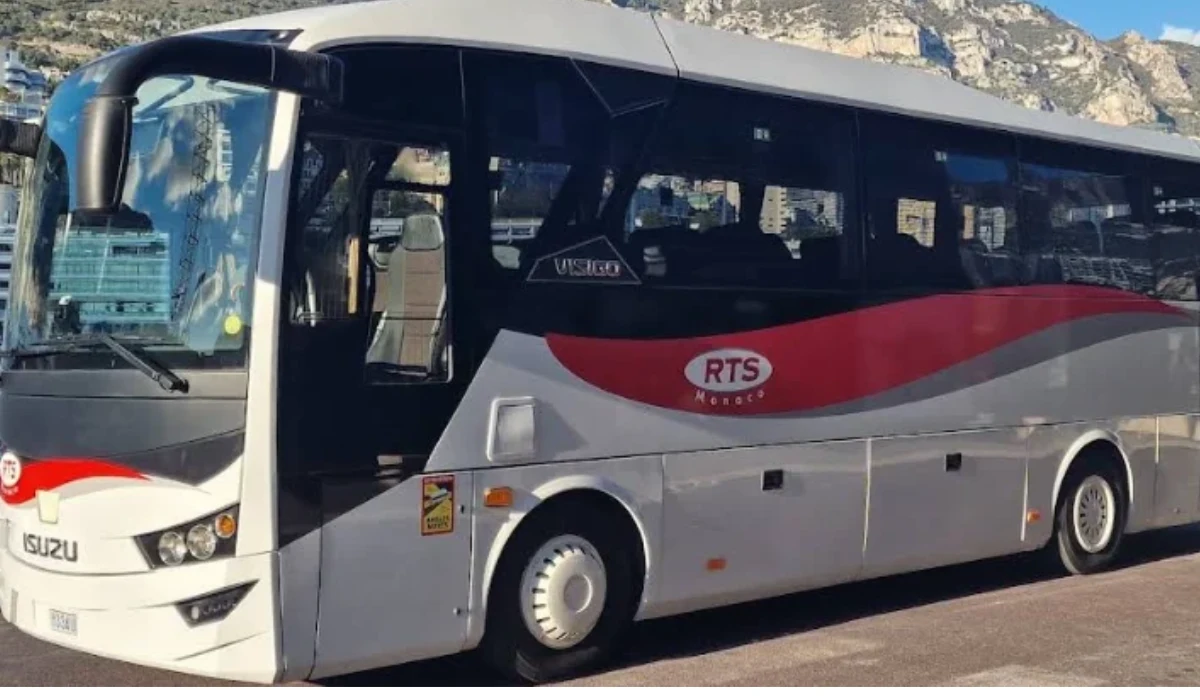
The Compagnie des Autobus de Monaco (CAM) has operated as the sole public transit operator in the Principality of Monaco under a long-standing state concession model, managing urban bus routes, evening shuttle networks, and the MonaBike electric bike-sharing system. Since 2020, the concession agreement governing CAM has operated under tacit administrative renewals while state authorities conducted comprehensive operational audits and evaluated urban mobility frameworks.
Monaco’s urban density and daily commuter inflows—comprising tens of thousands of cross-border workers arriving from France and Italy—present distinct traffic management challenges within a land area of just over two square kilometres. Over the past decade, the Prince’s Government has sought to promote modal shift away from private passenger vehicles through fleet electrification, real-time passenger tracking, expanded route coverage to newly developed areas like Mareterra (Le Portier), and targeted free-travel schemes during major international events such as the Formula 1 Monaco Grand Prix and the Rolex Monte-Carlo Masters. However, the sharp rise in state operational subsidies from €6.5 million to nearly €23 million has made public transport funding a key focal point in parliamentary oversight of public spending.
How Will This Development Affect Monaco Residents, Commuters, and Transport Policy?
The rejection of the transport budget section and the upcoming concession negotiations carry direct operational and policy implications for key stakeholders across the Principality:
- For Monaco Residents and Daily Commuters: Bus passengers can expect continued high-quality service, with two new dedicated transit routes launching in early 2027 between Monaco-Ville, Fontvieille, Jardin Exotique, and Saint-Roman. However, the broader debate over universal free bus travel remains unsettled, with the executive opting for targeted district services over zero-fare models.
- For National Council Lawmakers and Government Negotiators: The rejection of the public transport budget section sends a clear signal to the Prince’s Government that parliament expects stricter fiscal controls, clearer performance indicators, and greater transparency as specifications for the new CAM concession are finalized.
- For the Compagnie des Autobus de Monaco (CAM): The upcoming concessions commission meeting in late November will set rigid contractual targets regarding cost management, fleet efficiency, bike-sharing integration, and passenger growth expectations that CAM must satisfy to secure a long-term concession agreement.