Key Points
- Landmark Resolution Adopted: Government ministers from across Europe gathered in Monaco on 4 November 2026 to adopt the resolution “Safer and Healthier Sport for All Children and Young People” during the 19th Council of Europe Conference of Ministers responsible for Sport.
- Staggering Exclusion Statistic: International Paralympic Committee (IPC) First Vice-President Leila Marques Mota revealed that one in three children with disabilities worldwide currently has no access to physical education.
- Dual Protection Mandate: The conference emphasized that expanding physical access to sporting facilities must be inextricably linked with institutional protection against violence, harassment, abuse, and discrimination.
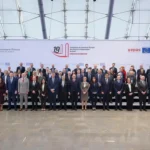
- High-Level Ministerial Assembly: Hosted at the Grimaldi Forum in partnership with the Enlarged Partial Agreement on Sport (EPAS), the summit convened approximately 300 delegates, including 25 state ministers, state secretaries, Prince Albert II, and Council of Europe Secretary General Alain Berset.
- Systemic Barrier Reforms: Leaders called for urgent public investments into accessible transport, adaptive sports equipment, qualified coaching staff, safe reporting channels, and independent reporting mechanisms free from retaliation.
Monaco (Monaco Weekly Newspaper) November 8, 2026 – Sports ministers and government delegates representing nations across Europe have formally adopted a comprehensive resolution to guarantee equal access to sport and protect children from physical and psychological abuse, following a major international summit held in the Principality of Monaco. According to official conference releases issued by the Council of Europe and reports covered by international news services following the 19th Council of Europe Conference of Ministers responsible for Sport on 4 November 2026, International Paralympic Committee (IPC) First Vice-President Leila Marques Mota addressed over 300 summit participants at the Grimaldi Forum, highlighting that one in three children with disabilities remains completely excluded from physical education. The landmark resolution, titled “Safer and Healthier Sport for All Children and Young People,” establishes mandatory guidelines for European governments and sports bodies to dismantle physical accessibility barriers while enforcing rigorous, independent child safeguarding protocols across all levels of youth athletics.
- What Did Leila Marques Mota Reveal Regarding Access Barriers for Disabled Children?
- Why Must Sports Accessibility Be Paired with Strict Safeguarding Against Abuse?
- What Key Commitments Are Outlined in the Newly Adopted Monaco Resolution?
- Background of the Particular Development After the News
- How This Development Can Affect National Sports Bodies, Disabled Youth, and European Legislation
What Did Leila Marques Mota Reveal Regarding Access Barriers for Disabled Children?
As reported by official summit correspondents covering the Council of Europe event, IPC First Vice-President Leila Marques Mota delivered a key address outlining the structural inequality faced by young people with disabilities seeking to enter the sporting arena.
Mota, a four-time Paralympian who made her debut at the Atlanta 1996 Paralympic Games, stressed that nominal legal rights mean very little if practical infrastructure fails to support young athletes.
The IPC representative presented stark data showing that one in three children with disabilities lacks access to physical education, warning that such systemic exclusion deprives children of crucial motor skill development, peer socialization, and self-confidence.
Mota identified a combination of environmental and institutional barriers, including inaccessible venue architecture, a lack of specialized adaptive equipment, absent transit networks, and social exclusion within local clubs.
She reminded delegates that equal access is protected under Article 30 of the United Nations Convention on the Rights of Persons with Disabilities, alongside World Health Organization recommendations prescribing at least 60 minutes of daily moderate-to-vigorous physical activity for all children aged five to 17.
Speaking before assembled ministers at the Grimaldi Forum, as reported by Council of Europe media officers, Leila Marques Mota stated: “Children’s right to participate in sport must not depend on disability, the availability of transport or the ability to find suitable equipment.”
Why Must Sports Accessibility Be Paired with Strict Safeguarding Against Abuse?
According to coverage published by European administrative news services, the second primary focus of the Monaco conference centered on protecting young athletes from harassment, abuse, and exploitation.
Mota cautioned that providing physical access to sports halls and playing fields is insufficient if sports environments lack rigorous safety mechanisms.
The IPC Vice-President emphasized that children with disabilities face disproportionate risks of violence, neglect, and bullying, making accessible, inclusive, and tailored safeguarding systems an absolute priority.
Under the framework presented in Monaco, sports organizations must institute clear, accessible reporting channels that allow children to seek assistance without fear of retaliation or removal from their teams.
Mota urged governments to mandate trained child protection officers, standardized background checks for staff and volunteers, and organization-wide safety rules that extend from grassroots community initiatives to elite professional academies.
The conference also evaluated non-physical threats to youth well-being, including excessive performance pressure, overtraining, early specialization, concussion management, and mental health strain.
Delegates agreed that indicators of psychological distress, humiliation, or burnout must be treated with the same institutional urgency as severe physical injuries.
What Key Commitments Are Outlined in the Newly Adopted Monaco Resolution?
As reported by the Council of Europe Secretariat, the conference concluded with the unanimous adoption of the resolution “Safer and Healthier Sport for All Children and Young People”.
The resolution establishes strategic requirements for participating member states and sporting federations:
- Safer Recruitment and Training: Implementing mandatory background checks and child protection training for all coaches, administrative staff, and volunteer workers.
- Independent Reporting Pathways: Establishing confidential, accessible reporting mechanisms operating independently of team coaches and club officials to investigate suspicions of abuse.
- Youth Consultation: Involving young athletes directly in governance decisions and policy evaluations to identify hidden safety hazards or operational shortcomings.
- Socio-Economic and Crisis Relief: Supporting low-income families and displaced youth through initiatives such as free mobile sports programs, financial aid grants, and targeted programs like the “Let’s Volley” project.
- Data-Driven Progress Monitoring: Tracking compliance through standardized indicators, measuring not just facility counts but actual participation rates and report handling outcomes.
The conference opened with addresses by H.S.H. Prince Albert II of Monaco and Council of Europe Secretary General Alain Berset, with proceedings chaired by Monaco’s Minister of the Interior, Lionel Beffre, and afternoon sessions presented by Princess Charlène.
Discussions also addressed maintaining athletic opportunities for children affected by armed conflict, specifically reviewing measures to keep sports schools open in Ukraine amid ongoing wartime conditions.
Background of the Particular Development After the News
The 19th Council of Europe Conference of Ministers responsible for Sport builds upon years of policy development through the Enlarged Partial Agreement on Sport (EPAS), established in 2007 to provide a co-operative platform between public authorities and sports organizations. The Monaco summit directly coincided with the 10th anniversary celebrations of the Saint-Denis Convention (Council of Europe Convention on an Integrated Safety, Security and Service Approach at Football Matches and Other Sports Events), highlighting the bloc’s growing focus on systemic safety across athletic domains.
Historically, sports governance focused heavily on elite performance and stadium safety. However, high-profile abuse scandals across various Olympic and national sports federations over the past decade pushed international bodies—such as the International Olympic Committee (IOC), the IPC, and the Council of Europe—to prioritize human rights, child protection, and athlete welfare. Article 30 of the UN Convention on the Rights of Persons with Disabilities, adopted in 2006, formally established the legal obligation of states to ensure inclusive recreation; yet national implementation has lagged severely, particularly regarding adaptive transport, certified coaches, and specialized sports equipment in public school systems.
How This Development Can Affect National Sports Bodies, Disabled Youth, and European Legislation
The adoption of the resolution in Monaco will initiate legislative, operational, and financial shifts across European sports administration and educational systems.
Impact on National Sports Federations and Local Athletic Clubs
For national sports governing bodies and community clubs across Europe, the resolution will accelerate mandatory compliance requirements. Organizations seeking public funding will increasingly be required to demonstrate certified child safeguarding policies, employ trained protection officers, and audit their facilities for physical accessibility. Clubs failing to implement independent reporting mechanisms risk losing state subsidies and municipal facility access.
Impact on Children with Disabilities and Family Advocacy Groups
For young athletes with disabilities and their families, the commitments made in Monaco offer stronger legal and administrative leverage. As governments translate the resolution into national action plans, families can expect increased public investment into adaptive physical education programs, accessible municipal transport, and subsidized specialized equipment. Enhanced reporting mechanisms will also afford greater confidence that instances of bullying or discrimination will meet swift, independent remediation.
Impact on European Legislative Frameworks and Audit Standards
For European legislative bodies and the Council of Europe’s EPAS monitoring committees, the focus will shift toward rigorous data collection and auditing. Member states will face regular evaluations measuring real-world usage of sports facilities by marginalized groups, ensuring that governments move beyond symbolic policy announcements to achieve measurable reductions in youth sports exclusion.