Key Points:
- Historic Sporting Return: The Monaco International Triathlon is returning to the Principality on Saturday, 7 November, and Sunday, 8 November 2026, marking the revival of the prestigious multi-sport event for the first time in 14 years.
- Major Seaward Road Closures: Authorities have mandated multi-phase traffic stoppages, including the closure of the seaward carriageway of Avenue Princesse Grace from 5:00 pm Saturday through 6:30 pm Sunday.
- Extended Sunday Disruption: Key arterial routes including Boulevard Louis II, Avenue des Spélugues, Avenue J.F. Kennedy, and the Portier and Larvotto slip roads will face heavy closures on Sunday between 9:00 am and 5:00 pm.
- Modified Public Transport Routes: Traffic flow along Avenue d’Ostende will be restructured, converting the dedicated public transport lane for downhill vehicles and the central lane for uphill traffic while reserving the seaward lane exclusively for race participants.
- Strict Parking Mandates: Parking prohibitions will apply across multiple central thoroughfares from Saturday evening, with residential access maintained strictly via check-point clearances managed by event staff.
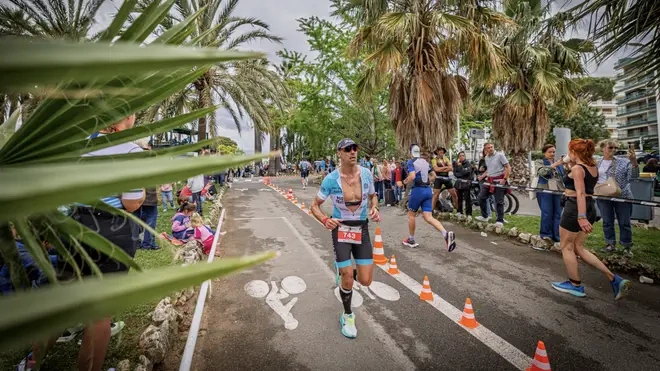
Monaco (Monaco Weekly Newspaper) November 4, 2026 – Extensive traffic restrictions, parking bans, and road closures will take effect across the Principality of Monaco this weekend to accommodate the long-awaited return of the Monaco International Triathlon. As reported by local government reporting and urban mobility bulletins from Monaco Life and HelloMonaco, the two-day event takes place on Saturday, 7 November, and Sunday, 8 November 2026, bringing international multi-sport competition back to the sovereign city-state for the first time in 14 years. To ensure participant safety and race integrity, Prince’s Government authorities have announced comprehensive modifications to public thoroughfares, affecting primary corridors such as Avenue Princesse Grace, Boulevard Louis II, and Avenue des Spélugues. Emergency services and event organisers confirmed that while residential access to private properties will be preserved, property owners will be subject to systematic verification checks at designated access points throughout the duration of the event.
- Key Points:
- What are the precise road closures and traffic restrictions for the Monaco International Triathlon?
- How will public transport and vehicle traffic patterns be modified along Avenue d’Ostende?
- What parking prohibitions and access guidelines apply to Monaco residents and visitors?
- Background of the Monaco International Triathlon and 14-Year Hiatus
- Local Mobility, Business Revenues, and Annual Sports Event Calendars
What are the precise road closures and traffic restrictions for the Monaco International Triathlon?
As reported by civic affairs journalists for Monaco Life, local authorities have established a staggered schedule of road closures beginning late Saturday afternoon and extending through Sunday evening.
The initial phase of road closures begins on Saturday, 7 November, at 5:00 pm, when the seaward carriageway of Avenue Princesse Grace will be completely shut down to vehicular traffic between Place Anne-Marie Campora and Place Joséphine Baker. This closure will remain active continuously until Sunday at 6:30 pm.
On Sunday, 8 November, traffic management restrictions will expand substantially across two operational phases:
- Morning Extension (7:00 am to 2:00 pm): Access limitations will stretch further along Avenue Princesse Grace towards the Monte-Carlo Bay roundabout.
- Full Race Phase (9:00 am to 5:00 pm): Comprehensive seaward closures will come into effect across Boulevard Louis II, Avenue des Spélugues, Avenue J.F. Kennedy (encompassing its seaward carriageway and designated sections of the inland lane), Avenue Princesse Grace between the Portier roundabout and house number 39, and all connecting slip roads at Portier and Larvotto.
Additionally, vehicles travelling northbound from Boulevard Louis II during the peak race window on Sunday will be diverted onto the Route de la Piscine.
How will public transport and vehicle traffic patterns be modified along Avenue d’Ostende?
As reported by public transport correspondents for HelloMonaco, municipal transit operators and urban planners have introduced modified traffic lanes along Avenue d’Ostende to preserve essential north-south connectivity during the race.
Between 9:00 am and 5:00 pm on Sunday, the standard lane configuration on Avenue d’Ostende will be re-routed as follows:
- Downhill Traffic: Vehicles heading downhill toward the port area will be routed exclusively through the lane normally reserved for public transport buses.
- Uphill Traffic: Vehicles travelling uphill towards Casino Square and upper Monte Carlo will utilise the central lane.
- Race Corridor: The entire seaward carriageway of Avenue d’Ostende will be fully segregated and reserved for triathlon athletes.
Furthermore, between 9:30 am and 6:30 pm on Sunday, race organisers have authorized triathlon competitors to share and cross designated sections of public roads typically reserved exclusively for motor vehicles.
What parking prohibitions and access guidelines apply to Monaco residents and visitors?
As reported by police reporting syndicates for La Gazette de Monaco, strict parking enforcement measures will be executed by national security forces to clear the competition course of parked vehicles.
Vehicular parking prohibitions will be enforced according to the following official timeline:
- Avenue Princesse Grace: Parking is banned from Saturday, 7 November, at 5:00 pm until Sunday, 8 November, at 6:30 pm.
- Surrounding Thoroughfares: Parking bans will take effect from Saturday at 11:00 pm until Sunday at 6:30 pm across Avenue des Citronniers, Avenue J.F. Kennedy, Boulevard Louis II, Avenue de Monte-Carlo, Avenue d’Ostende, and Avenue des Spélugues.
Government officials have advised residents and visitors planning to travel through the Principality over the weekend to make advance travel arrangements, utilise public underground parking structures situated outside the race perimeter, and allow substantial additional travel time. Detailed event schedules, route maps, and operational guides have been made available to the public via the official event web portal at monaco-international-triathlon.com.
Background of the Monaco International Triathlon and 14-Year Hiatus
The Monaco International Triathlon holds a storied legacy within European endurance sports, having historically hosted world-class middle-distance and Ironman 70.3 competitions throughout the 1990s and 2000s. The event famously drew elite international triathletes who competed across a iconic course taking in the Larvotto waterfront, demanding climbs up the surrounding Maritime Alps into neighbouring French communes, and a running leg laid out directly along the iconic Monaco Grand Prix Formula 1 street circuit.
However, escalating urban development projects—including the extensive off-shore land extension at Mareterra—combined with intense congestion on regional road networks and competing international sports calendars led to the event being suspended after its 2012 edition. The 2026 revival marks the culmination of a multi-year collaborative effort between the Monegasque Triathlon Federation, municipal authorities, and regional French departments to re-establish a premier international multi-sport fixture in the Principality while balancing the logistical demands of modern urban transportation.
Local Mobility, Business Revenues, and Annual Sports Event Calendars
The successful execution of the 2026 Monaco International Triathlon is predicted to influence municipal traffic management strategies, hospitality sector revenues, and the permanent scheduling of major international endurance events within the Principality through 2027 and beyond.
For local business operators, hoteliers, and restaurateurs in the Larvotto and Monte-Carlo districts, the return of the triathlon is predicted to generate a strong economic boost during the shoulder tourism month of November. The influx of nearly 3,000 international participants, coaching staff, and spectating families is expected to drive high occupancy rates across local hotel accommodations and boost foot traffic for retail and dining establishments along the waterfront.
For municipal urban planning authorities and local residents, the weekend traffic disruptions will serve as an operational test for managing large-scale road races within Monaco’s dense urban geography. If the temporary traffic diversions along Avenue d’Ostende and controlled residential checkpoints prove effective at mitigating gridlock, government planners are predicted to codify this traffic control model, paving the way for the Monaco International Triathlon to re-establish itself as an annual anchor on the Principality’s international sporting calendar alongside the Formula 1 Grand Prix and the Monte-Carlo Masters.