Key Points
- Blue Circle Victory: Monaco-based ecological startup Grogenics, led by Josée Dancause, has won the top Blue Circle Award at the 2026 OceanLove Innovation Awards for its initiative titled “What If Sargassum Could Give Back?”.
- Double Recognition: The project secured top honors from both an international panel of expert judges and a global public vote during a live-streamed ceremony at AltaSea in the Port of Los Angeles on Sunday, 11 October 2026.
- Innovative Solution: Piloted in Belize, Grogenics intercepts invasive sargassum seaweed in shallow waters before it decays, using lightweight electric vehicles to protect sea turtle nesting sites, removing heavy metals and salt to convert the biomass into nutrient-rich organic soil.
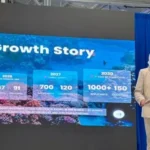
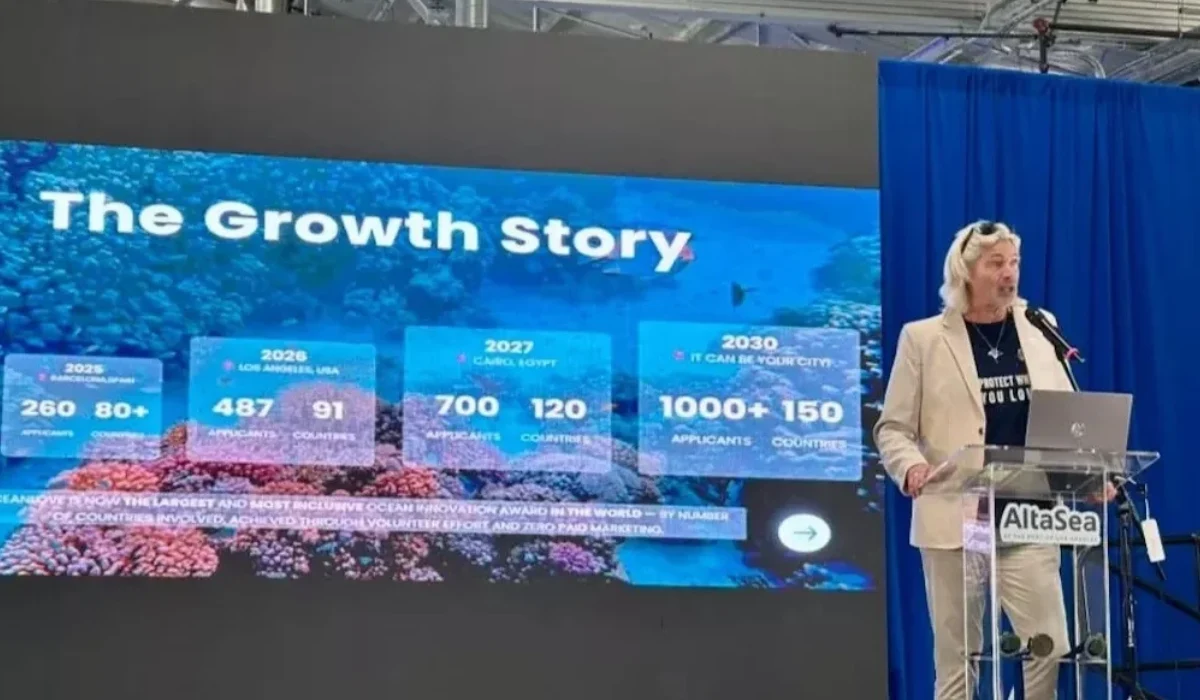
- Record Global Participation: The 2026 OceanLove Innovation Awards received a record 487 applications from 91 countries, representing an 80% increase compared to the 2025 edition.
- Growth and Monaco Expansion: Grogenics received $10,000 USD in seed funding, executive coaching, and global media support, while OceanLove announced plans to appoint a dedicated Country Ambassador for Monaco to expand its regional environmental incubator network.
Monaco (Monaco Weekly Newspaper) October 28, 2026 – Monaco-based environmental venture Grogenics has been awarded the prestigious Blue Circle Award at the 2026 OceanLove Innovation Awards for its pioneer solution transforming invasive sargassum seaweed into high-grade organic fertiliser. Led by Josée Dancause and currently operating a primary pilot project in Belize, the initiative—titled “What If Sargassum Could Give Back?”—achieved a double victory by claiming both the expert panel prize and the global public vote during a live-streamed ceremony hosted at AltaSea in the Port of Los Angeles on Sunday, 11 October 2026. The award provides Grogenics with $10,000 USD in seed funding, executive mentorship, and international media exposure, while highlighting the Principality of Monaco’s rising stature as a global incubator for ocean conservation technologies.
- Key Points
- How Does Grogenics’ Technology Convert the Sargassum Seaweed Crisis into Organic Fertiliser?
- What Recognition and Support Did Grogenics Receive at the 2026 OceanLove Innovation Awards?
- How Is Monaco Strengthening Its Position as a Hub for Global Marine Conservation?
- Background of the Caribbean Sargassum Influx and the OceanLove Foundation
- How This Award Will Affect Caribbean Communities, Coastal Tourism, and Soil Health
How Does Grogenics’ Technology Convert the Sargassum Seaweed Crisis into Organic Fertiliser?
As reported by Virginia D’Umas of Monaco Life, the annual influx of massive sargassum seaweed blooms across Caribbean and tropical Atlantic shorelines presents a severe ecological and economic crisis. Tons of rotting biomass line beaches each year, smothering delicate coastal ecosystems, trapping sea turtle hatchlings, polluting drinking water tables, and releasing toxic gases such as hydrogen sulfide and ammonia as decomposition sets in. Traditional mitigation attempts rely on heavy industrial earth-moving equipment that erodes sand dunes or simply relocates decaying seaweed into municipal landfills, exacerbating greenhouse gas emissions.
According to technical specifications released by Grogenics and reported by Ocean Decade, the project deploys a lightweight, low-impact harvesting and upcycling strategy designed to protect fragile coastal environments. Grogenics intercepts floating sargassum mats in shallow coastal waters before the biomass reaches the shore or begins rotting. On beaches, the team utilizes specialized lightweight electric vehicles to harvest shorelines without disturbing sea turtle nesting grounds or causing dune erosion.
Once collected, the sargassum undergoes a proprietary, patent-pending bioremediation process that cleanses the biomass of heavy metals, microplastics, and excess salt contents. The processed seaweed is then combined with biochar and organic green waste in open-air windrow systems, converting the hazardous waste into a nutrient-rich, gold-standard certified organic soil conditioner.
What Recognition and Support Did Grogenics Receive at the 2026 OceanLove Innovation Awards?
As reported by Ocean Decade, the third edition of the OceanLove Innovation Awards ceremony took place on 11 October 2026 at the AltaSea ocean technology campus in the Port of Los Angeles, California. The 2026 event attracted a record-breaking 487 applicant submissions spanning 91 nations—marking an 80 per cent surge in entries compared to the 2025 competition cycle.
Josée Dancause’s project, “What If Sargassum Could Give Back?”, secured top honours across two distinct voting categories:
- The Blue Circle Award: Awarded by an international panel of marine scientists, environmental investors, and circular economy experts evaluating innovations tackling ocean pollution and ecological degradation.
- Public Favorite Vote: Won following a live, globally broadcast voting process involving international audience participation.
As part of the Blue Circle victory package, Grogenics received $10,000 USD in direct seed capital, one full year of executive business coaching, and tailored global media support to scale its operations across the wider Caribbean basin. The initiative already carries significant global credentials, including endorsement as an official UN Ocean Decade Project, recognition as a World Economic Forum UpLink winner, and certification under Gold Standard carbon credit registries.
How Is Monaco Strengthening Its Position as a Hub for Global Marine Conservation?
The victory for Grogenics underscores the Principality of Monaco’s expanding role as a global incubator for sustainable marine technologies and environmental entrepreneurship.
Speaking at the ceremony and quoted by Monaco Life and Ocean Decade, Ilco van der Linde, Founder of OceanLove, reflected on the rapid global expansion of grass-roots ocean solutions. “When we started, people asked whether there were really enough ocean ideas out there to fill an award,” van der Linde stated. “This year we read 487 of them, from 91 countries. The ideas were never the scarce thing — the platform was.”
OceanLove operates under high-level international backing, supported by world-renowned marine biologist Dr. Sylvia Earle and former Unilever Chief Executive Officer Paul Polman. Following Grogenics’ double victory, OceanLove announced it is actively recruiting a dedicated Country Ambassador for Monaco. The incoming ambassador will join a global network of 30 national representatives responsible for sourcing, mentoring, and amplifying local environmental innovators and connecting them with international capital.
Background of the Caribbean Sargassum Influx and the OceanLove Foundation
The proliferation of sargassum seaweed across the tropical Atlantic and Caribbean Sea has escalated dramatically since 2011, driven by rising sea surface temperatures, altered ocean currents, and increased agricultural nutrient runoff entering ocean basins from major river systems. The resulting multi-million-ton floating seaweed belts drift into coastal waters annually, creating acute economic crises for small island developing states (SIDS) and coastal communities reliant on tourism, commercial fishing, and local marine biodiversity.
Concurrently, the OceanLove Innovation Awards were established in 2021 as a volunteer-driven non-profit initiative designed to bridge the structural gap between early-stage marine conservation concepts and scalable commercial deployment. Rather than functioning solely as a financial grant competition, the awards provide grass-roots innovators with operational mentorship, peer-to-peer knowledge exchanges, and long-term integration into global ocean technology networks.
How This Award Will Affect Caribbean Communities, Coastal Tourism, and Soil Health
The recognition and capital injection awarded to Grogenics will generate direct ecological, economic, and operational impacts across vulnerable coastal zones in the Caribbean and tropical Atlantic regions.
1. Relief for Tourism-Dependent Coastal Economies
As Grogenics scales its modular harvesting operations from Belize into adjacent Caribbean nations, resort operators and municipal governments will gain a cost-effective, non-destructive alternative to traditional heavy-machinery beach clearing. By intercepting sargassum offshore, coastal communities can preserve pristine beach conditions, protect marine ecosystems, and avoid seasonal drops in tourism revenue caused by rotting seaweed odors.
2. Transition Toward Regenerative Local Agriculture
Small-scale agricultural producers across Caribbean island nations—who historically depend on expensive, imported synthetic chemical fertilizers—will gain access to locally produced, organic soil amendments. The application of biochar-enhanced sargassum compost improves soil moisture retention, restores degraded arable land, and reduces farmers’ operational costs while eliminating chemical runoff into surrounding coral reef habitats.
3. Expansion of Blue Economy Investment in Monaco
The high-profile recognition of a Monaco-based venture will attract elevated venture capital and impact investment into the Principality’s emerging green-tech ecosystem. With OceanLove establishing a dedicated Country Ambassador in Monte Carlo, local research institutions, family offices, and environmental startups will benefit from streamlined pathways to international mentorship, UN-backed programs, and global sustainability networks.