Key Points
- Legislative Approval After Impasse: Monaco’s National Council passed the Principality’s 2026 amended budget on Thursday 15 October 2026 with 13 votes in favour, two against, and five abstentions. The vote concluded a tense political standoff after National Council President Thomas Brezzo suspended public debates on 7 October 2026 in protest against the executive branch.
- National Priority in Public Employment: The elected Assembly secured key concessions from the Government to protect employment for Monegasque citizens, including the creation of a joint commission to assist nationals in their careers, systematic advertising of senior civil service vacancies, and an annual compliance report submitted to the Council.
- State-Owned Housing Commitments: The Government reaffirmed its long-term commitment to house 75% of Monegasque citizens in state-owned accommodation. While addressing the current delivery drought in 2026 and 2027 caused by geotechnical project delays, officials pledged approximately 90 homes through accelerated renovations prior to the completion of major developments like the Bel Air tower in January 2028.
- Revenue Shortfalls and Fiscal Squeeze: Revenue forecasts were revised downward by €67.9 million (3.1%) to €2.149 billion, primarily due to declining Value Added Tax (VAT) and corporate tax receipts following the completion of the Mareterra land extension project.
- Budget Balancing via Investment Postponement: To maintain a net fiscal surplus of €5.9 million without levying personal income tax or issuing debt, the Government removed €107 million in capital expenditure. Parliamentary representatives expressed concern that delaying capital projects merely shifts financial burdens onto the upcoming 2027 budget cycle.
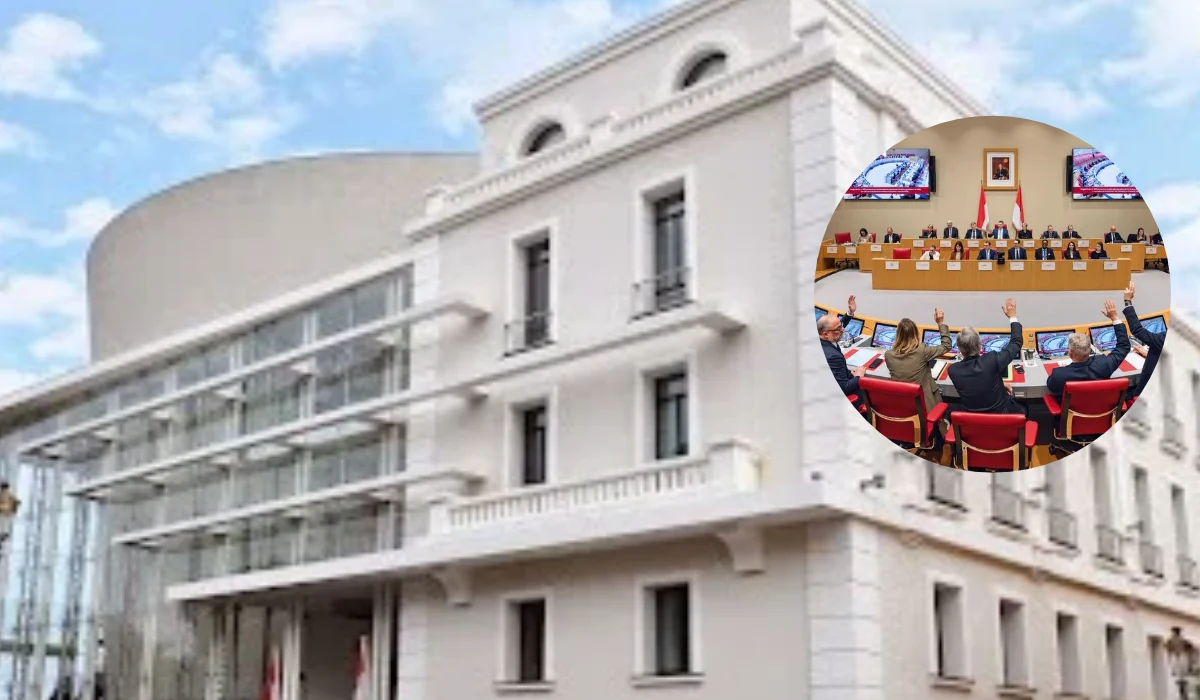
Monaco (Monaco Weekly News) October 16, 2026 – Monaco’s National Council approved the Principality’s 2026 amended budget on Thursday 15 October 2026 following a week-long institutional standoff between the elected Assembly and the Prince’s Government. As reported by Cassandra Tanti of Monaco Life, the vote passed with 13 votes in favour, two against, and five abstentions after National Council President Thomas Brezzo secured concrete policy commitments regarding public sector employment priorities and state-owned housing allocations. The legislative resolution concluded a public dispute that escalated when Brezzo suspended parliamentary debates on 7 October 2026 following remarks by Minister of State Christophe Mirmand regarding executive authority. The amended financial bill reflects a downward revision of revenue by €67.9 million to €2.149 billion alongside a €107 million deferral of capital investments to preserve a nominal budget surplus.
- Key Points
- Why Was the 2026 Amended Budget Session Suspended by the National Council?
- What Specific Policy Commitments Did the National Council Secure on Employment and Housing?
- How Did Lower State Revenues Impact Monaco’s 2026 Financial Strategy?
- Background of the 2026 Budget Crisis and Constitutional Relations in Monaco
- How This Development Will Affect Monegasque Citizens, Businesses, and Public Sector Workers
Why Was the 2026 Amended Budget Session Suspended by the National Council?
As reported by Cassandra Tanti of Monaco Life, the approval of the amended budget followed a period of acute political friction between Monaco’s executive and legislative branches. At the opening public session on 7 October 2026, Minister of State Christophe Mirmand addressed the Assembly by emphasizing that the Prince’s Government derives its strategic roadmap and political mandate solely from the Sovereign Prince, Prince Albert II, rather than being constitutionally answerable to the National Council.
According to the reporting of Cassandra Tanti, elected councillors argued that Mirmand’s statements inflicted serious institutional damage “in substance as in tone” on inter-institutional relations. National Council President Thomas Brezzo took the rare step of suspending the public session to allow the Minister of State time for reflection, asserting that parliamentarians could not relinquish their statutory prerogatives without risking a total administrative deadlock.
At the center of the dispute were two core policy demands raised by elected representatives: stricter enforcement of the National Priority (Priorité Nationale) in employment and an accelerated construction schedule for state-owned housing. In September 2026, Brezzo stated that more than 50 qualified Monegasque candidates were rejected for public sector employment each year, calling the figure “unacceptable”. As documented by Cassandra Tanti and further reported by Clément Martinet of Monaco Hebdo, the Government disputed the figure, stating that 2025 public sector applications concerned 31 Monegasque nationals, 16 of whom were successfully recruited.
Upon the passage of the budget, National Council President Thomas Brezzo emphasized institutional unity, as reported by Cassandra Tanti of Monaco Life:
“The Assembly did not win against the Government, and the Government did not give way to the Assembly. It is Monaco that is moving forward.”
What Specific Policy Commitments Did the National Council Secure on Employment and Housing?
As reported by Cassandra Tanti of Monaco Life, when public budget debates resumed, the Government revised its stance on key legislative requests. On employment access, the executive agreed to establish a joint commission tasked with assisting Monegasque nationals who encounter career difficulties—a measure previously rejected by Minister of State Christophe Mirmand on the grounds of constitutional separation of powers. Furthermore, senior positions within the civil service will now be advertised systematically to enable qualified Monegasque candidates to apply, supported by a dedicated liaison within the Minister of State’s office who will submit an annual report to the National Council evaluating the application of the National Priority.
Regarding housing policy, Cassandra Tanti reported that the Government reaffirmed its target of accommodating 75% of Monegasque citizens in state-owned housing. A policy gap had emerged during preliminary discussions, wherein the Assembly demanded the delivery of approximately 100 new state apartments annually, while executive forecasts prepared by the Monaco Statistics Institute (IMSEE) projected a requirement of 40 units per year.
As detailed by Cassandra Tanti of Monaco Life and supported by financial analysis from Clément Martinet of Monaco Hebdo, the supply of state housing faces immediate constraints, with zero new state apartments scheduled for completion in 2026 or 2027. Construction timelines for major developments, including the primary residential tower at Bel Air, were pushed back to January 2028 following complex geotechnical complications. To bridge the immediate housing shortfall, the Government committed to releasing approximately 90 homes during the upcoming allocation cycle by accelerating renovation programmes on existing properties.
How Did Lower State Revenues Impact Monaco’s 2026 Financial Strategy?
As reported by Cassandra Tanti of Monaco Life and verified by Clément Martinet of Monaco Hebdo, the 2026 amended budget operates within a tightening macroeconomic framework. State revenue estimates were revised downward by €67.9 million, or 3.1%, bringing total expected receipts to €2.149 billion compared to the initial projection of €2.216 billion. According to analysis by Clément Martinet of Monaco Hebdo, this marks the first mid-year downward correction of state receipts in Monaco since 2011.
As noted by Cassandra Tanti, the revenue decline was primarily driven by reduced collections from Value Added Tax (VAT) and corporate income tax following the conclusion of major capital inflows tied to the offshore Mareterra land extension project. Concurrently, ordinary public operating expenditure expanded by 3% compared to the initial budget, fueled by contractual civil service salary adjustments and operational costs associated with hosting the official visit of the Pope.
To maintain a balanced budget, the executive branch canceled or deferred €107 million in planned capital investment expenditure. Government representatives stated that €104 million of this reduction reflects project schedule adjustments rather than permanent cancellations.
As reported by Cassandra Tanti of Monaco Life, Franck Julien, Chairman of the National Council’s Finance and National Economy Committee, voiced strong skepticism regarding capital expenditure deferrals:
“Postponing is not saving: these expenses will come back in 2027.”
In response to legislative criticisms regarding revenue forecasting, Minister of State Christophe Mirmand defended the executive’s financial methodology, as reported by Cassandra Tanti of Monaco Life and detailed by Clément Martinet of Monaco Hebdo. Pointing out that the Government was criticized in 2025 for underestimating annual receipts by €400 million, Mirmand framed the current 3% variance on a €2.1 billion budget as a standard recalibration rather than a structural miscalculation. Mirmand highlighted that the amended budget maintains a net surplus of €5.9 million, operates without sovereign debt, and retains Monaco’s zero-income-tax policy framework.
Background of the 2026 Budget Crisis and Constitutional Relations in Monaco
The institutional friction observed during the October 2026 amended budget debates highlights long-standing structural features of the Principality of Monaco’s constitutional framework. Under the Constitution of 17 December 1962 (as amended in 2002), executive power is retained by the Sovereign Prince, who appoints the Minister of State and the Council of Government. Legislative authority is shared jointly between the Sovereign Prince and the unicameral National Council, whose 24 members are elected by direct universal suffrage.
While the Government is not parliamentary—meaning the Minister of State does not require a formal vote of confidence from the National Council to remain in office—the Assembly holds absolute authority over the passage of the national budget. Historically, the National Council has utilized its sole power of budgetary consent to negotiate socio-economic priorities for native Monegasque citizens, who constitute approximately a quarter of the Principality’s resident population. The principle of Priorité Nationale (National Priority), enshrined in Monaco’s legal framework, guarantees citizens priority access to employment, social aid, and state housing. As large-scale infrastructure projects conclude and land scarcity limits immediate residential expansion, balancing citizen guarantees against broader economic constraints remains a primary source of political debate between the Assembly and the executive branch.
How This Development Will Affect Monegasque Citizens, Businesses, and Public Sector Workers
The adoption of the 2026 amended budget and the accompanying executive concessions are projected to produce distinct, measurable outcomes across key stakeholder groups in the Principality:
- For Monegasque Citizens and Job Seekers: Citizens seeking public sector employment will experience increased transparency and administrative oversight. The institutionalization of a joint employment commission and the systematic advertising of senior civil service positions will lower barriers for qualified Monegasque candidates entering the public sector. On housing, while the commitment to house 75% of nationals remains firm, citizens facing immediate housing needs will depend heavily on the accelerated distribution of approximately 90 renovated apartments throughout 2026 and 2027 until major developments like the Bel Air project become available in 2028.
- For Public Sector Workers and Civil Servants: Public administration personnel will benefit from planned operating expenditure increases, which include approved civil service salary increases. However, department heads will face greater reporting scrutiny regarding hiring procedures to ensure alignment with statutory National Priority mandates reported annually to the Minister of State’s office and the National Council.
- For Private Businesses and Infrastructure Contractors: Construction firms, real estate developers, and municipal contractors will feel the commercial impact of deferred state capital investments. With €107 million in investment spending temporarily removed from the 2026 balance sheet, private sector vendors may experience delayed procurement schedules and contract extensions until capital outlays are re-introduced during the 2027 budget examinations in December.