Key Points
- New Organized Mooring Infrastructure: Monaco has launched off-shore marine works to establish a dedicated organised mooring area (ZMEL) off Larvotto beach to accommodate up to nine superyachts measuring between 50 and 90 metres in length.
- Protecting Marine Biodiversity: The project aims to eliminate unregulated, destructive anchoring on the seabed, safeguarding essential Posidonia oceanica seagrass meadows and benthic habitats.
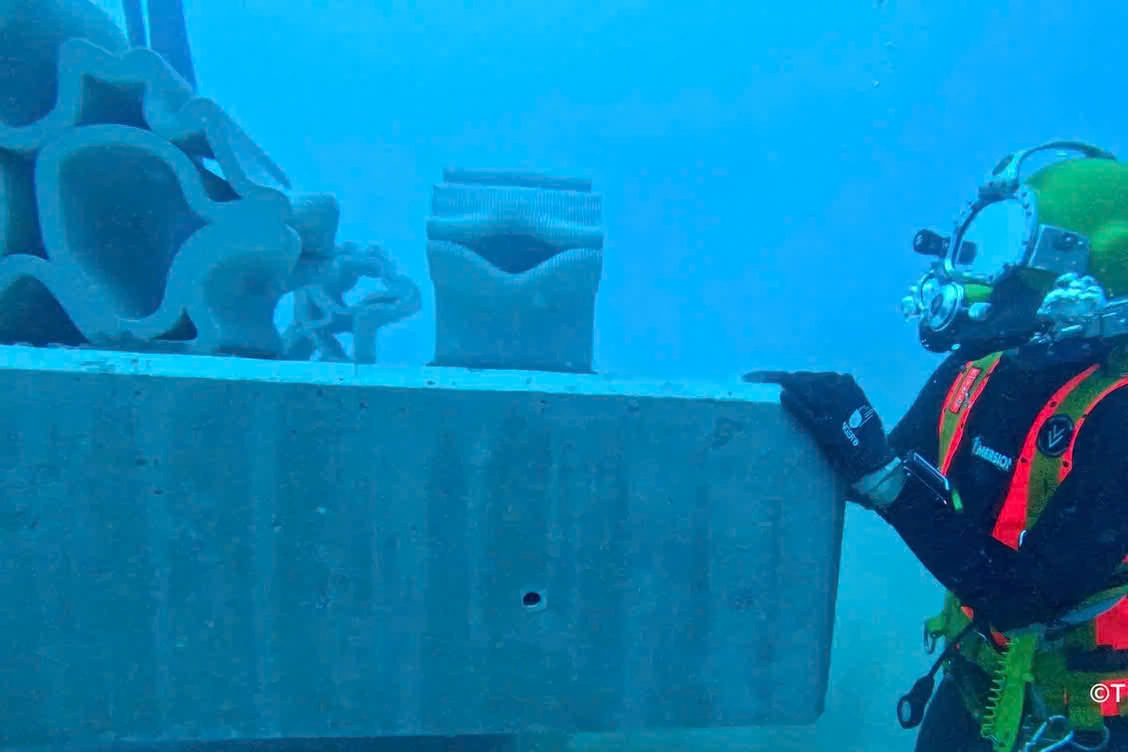
- 3D-Printed Ecological Concrete Reefs: Specialist contractor Trasomar has partnered with French startup LineUp Ocean to integrate 3D-printed bio-receptive concrete modules made from an oyster shell-based mortar, serving as eco-designed anchor blocks that actively foster marine life.
- Deep-Water Technical Challenge: Unlike standard shallow-water mooring systems, the Monaco installation is engineered for deep-water depths ranging between 45 and 80 metres, making the marine engineering works particularly complex.
- Official Timeline and Management: Initiated by Monaco’s Department of Maritime Affairs (Direction des Affaires Maritimes) alongside French maritime authorities, the offshore construction barge began operations on 7 October 2026, with the facility set to be operational for the 2027 summer season under the management of the Société d’Exploitation des Ports de Monaco (SEPM).
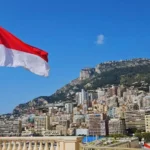
Monaco (Monaco Weekly Newspaper) November 9, 2026 – The Princely Government of Monaco has commenced the final offshore engineering phase of a multi-year marine conservation project designed to shelter its vulnerable coastal seabed from heavy superyacht anchor damage. According to reporting published by La Gazette de Monaco and NEWS.MC, a specialized construction barge operated by Monegasque maritime contractor Trasomar has been stationed in Monaco Bay off Larvotto beach since 7 October 2026 to position nine deep-water eco-designed mooring buoys. Developed by the Department of Maritime Affairs (Direction des Affaires Maritimes) in consultation with French maritime authorities, the project replaces conventional, destructive anchor drops with a managed mooring system anchored by 3D-printed artificial reefs crafted from an oyster shell-based mortar by environmental startup LineUp Ocean. Designed to accommodate vessels ranging from 50 to 90 metres, the installation is scheduled for full operational deployment ahead of the 2027 Mediterranean summer yachting season.
- How Does the Eco-Designed Mooring Infrastructure Protect Larvotto’s Marine Habitats?
- What Makes the 3D-Printed Artificial Reef Anchor Blocks Technologically Innovative?
- Why Is the Larvotto Deep-Water Installation Technically More Challenging Than Other Mediterranean Sites?
- Background of the Particular Development After the News
- How This Development Can Affect Yacht Captains, Marine Ecologists, and Coastal Policy Makers
How Does the Eco-Designed Mooring Infrastructure Protect Larvotto’s Marine Habitats?
As reported by maritime correspondent Stephanie Bon de la Gazette for La Gazette de Monaco, the primary objective of creating an organized mooring area (Zone de Mouillage et d’Équipements Légers, or ZMEL) off Larvotto is to halt the ecological degradation caused by individual superyacht anchors.
When heavy motor yachts drop anchor in unmanaged coastal waters, the dragging of massive iron anchors and heavy anchor chains along the seafloor violently uproots benthic flora.
This uncontrolled anchoring has historically inflicted severe damage on Posidonia oceanica (Neptune grass) meadows—a crucial Mediterranean seagrass species that provides oxygenation, coastal erosion defense, and breeding grounds for hundreds of marine species.
Speaking to local media regarding the environmental dynamics of the project, Benjamin Dubois de Mont-Marin, Director of Trasomar, emphasized that these buoys do not function as commercial marina expansions.
As reported by La Gazette de Monaco, Benjamin Dubois de Mont-Marin explained: “ZMELs are not port extensions. They are specifically designed to preserve marine life, as they prevent the chafing of anchor chains on the seabed”.
By tethering directly to permanent surface buoys anchored by eco-designed submerged blocks, visiting superyachts will no longer come into direct contact with fragile seabed habitats.
What Makes the 3D-Printed Artificial Reef Anchor Blocks Technologically Innovative?
According to coverage by Monaco Tribune and La Gazette de Monaco, the project combines traditional structural anchoring with advanced biological restoration techniques.
To secure the heavy surface buoys, prime contractor Trasomar partnered with Montpellier-based environmental technology startup LineUp Ocean to fabricate customized 3D-printed concrete foundation blocks.
Rather than utilizing smooth, inert concrete blocks that offer minimal biological utility, the foundation structures feature:
- Oyster Shell Mortar Composition: The 3D-printed bio-receptive concrete incorporates pulverized oyster shells, creating a natural pH balance and chemical texture that encourages the settlement of marine organisms.
- Complex Micro-Architectures: The additive manufacturing process creates intricate surface textures, internal crevices, and protective cavities that replicate natural rocky reefs.
- Biodiversity Habitat Restoration: The artificial structures provide structural refuge for juvenile fish, crustaceans, mollusks, and encrusting algae, actively converting structural mooring anchors into thriving bio-reefs.
Addressing the engineering intricacies required to deploy these combined mooring and reef structures, Trasomar lead engineer Augustin Coronat explained the complex hydrographic parameters involved.
As reported by engineering reporters covering the offshore deployment, Augustin Coronat detailed that positioning heavy bio-receptive modules on steep seabed slopes requires precision underwater placement, ensuring each block sits firmly without disrupting existing natural rock formations or remaining Posidonia patches.
Why Is the Larvotto Deep-Water Installation Technically More Challenging Than Other Mediterranean Sites?
As reported by NEWS.MC and official releases from the Prince’s Government of Monaco, the Larvotto ZMEL project presents distinct technical difficulties compared to conventional mooring zones along the French Riviera.
While Trasomar has previously engineered mooring fields in Antibes, Cannes, Le Lavandou, Villefranche-sur-Mer, and Pampelonne, the Monaco Bay installation is situated in significantly deeper water.
The nine mooring buoys off Larvotto are anchored at depths ranging between 45 and 80 metres.
Operating at these depths requires high-capacity marine barges, specialized commercial diving operations, and heavy-duty underwater cabling capable of managing extreme kinetic tension from large vessels.
The facility is specifically tiered to accommodate major vessel size categories:
- Four Mooring Buoys: Designated for superyachts up to 50 metres in length.
- Three Mooring Buoys: Designated for large superyachts up to 70 metres in length.
- Two Mooring Buoys: Designated for mega-yachts up to 90 metres in length.
Because the designated sector overlaps with areas traditionally used by visiting yachts during major events—such as the Monaco Grand Prix and the Monaco Yacht Show—the project was developed in close coordination with French maritime authorities to manage international shipping lanes and maritime safety protocols.
Background of the Particular Development After the News
The establishment of the organized mooring area off Larvotto beach represents a key milestone in Monaco’s long-term marine conservation strategy, championed by Prince Albert II and the Prince’s Government. Monaco’s coastal waters feature the Larvotto Marine Reserve, a Marine Protected Area (MPA) originally established in the 1970s to safeguard shallow-water Posidonia beds and noble pen shell (Pinna nobilis) populations. Over the past decade, increasing yacht traffic along the French Riviera pushed regulatory authorities across France and Monaco to enact stricter controls on anchoring for vessels over 24 metres.
Prior to the current 2026 deployment, Monaco conducted several pilot projects involving artificial reefs, including the submersion of 3D-printed sand and volcanic ash reef modules in 2017 to monitor marine recolonization within the reserve. Building on those scientific trials, the Department of Maritime Affairs launched a public call for tenders in 2023 to design a permanent, high-capacity mooring zone capable of accommodating large motor yachts while enforcing environmental compliance. The winning bid by Trasomar integrated LineUp Ocean’s bio-receptive concrete technology, bringing together commercial maritime engineering and ecological restoration. The offshore construction phase, which began on 7 October 2026, is scheduled to conclude by 31 March 2027, ensuring the area is fully operational under the management of the Société d’Exploitation des Ports de Monaco (SEPM) for the 2027 summer season.
How This Development Can Affect Yacht Captains, Marine Ecologists, and Coastal Policy Makers
The completion and operational integration of the Larvotto organized mooring area will produce clear operational, ecological, and regulatory outcomes across the Western Mediterranean yachting sector.
Impact on Yacht Captains and Superyacht Charter Operators
For superyacht captains, vessel owners, and maritime brokers operating in Monegasque waters, the new ZMEL provides guaranteed, safe mooring reservations in close proximity to Monte-Carlo during peak summer months. Eliminating the need to search for suitable anchoring seabed in deep water reduces operational stress and anchor drag risks during high winds. However, captains will face strict enforcement prohibiting free anchoring outside designated zones, requiring early reservation booking via SEPM port management channels.
Impact on Marine Ecologists and Biodiversity Monitoring Programs
For marine biologists and environmental researchers at the Prince Albert II of Monaco Foundation and regional research laboratories, the 3D-printed bio-receptive anchor blocks offer a long-term field study environment. Scientists will track the colonization speed of encrusting organisms, juvenile fish density, and the recovery rate of surrounding Posidonia meadows. Positive ecological data from the oyster shell-based concrete modules will likely validate 3D-printed bio-structures as standard protocol for marine construction projects across Europe.
Impact on Mediterranean Coastal Authorities and Environmental Legislation
For government maritime agencies across Western Europe, Monaco’s deep-water eco-mooring model establishes a technical precedent for balancing high-end nautical tourism with strict coastal conservation. Other Mediterranean resort destinations facing heavy yacht traffic—such as the Balearic Islands, Sardinia, and the Italian Riviera—are likely to replicate the combination of deep-water ZMEL regulations and 3D-printed bio-reef anchor systems to meet European Union marine habitat protection mandates.