Key Points:
- What pledges did Monaco make at the COP17 summit in Yerevan?
- How is Monaco updating its national environmental policies?
- How does Monaco’s contribution fit into the broader COP17 multilateral agreements?
- Background of the Kunming-Montreal Global Biodiversity Framework and the GBFF
- International Biodiversity Funding and Monaco’s Role
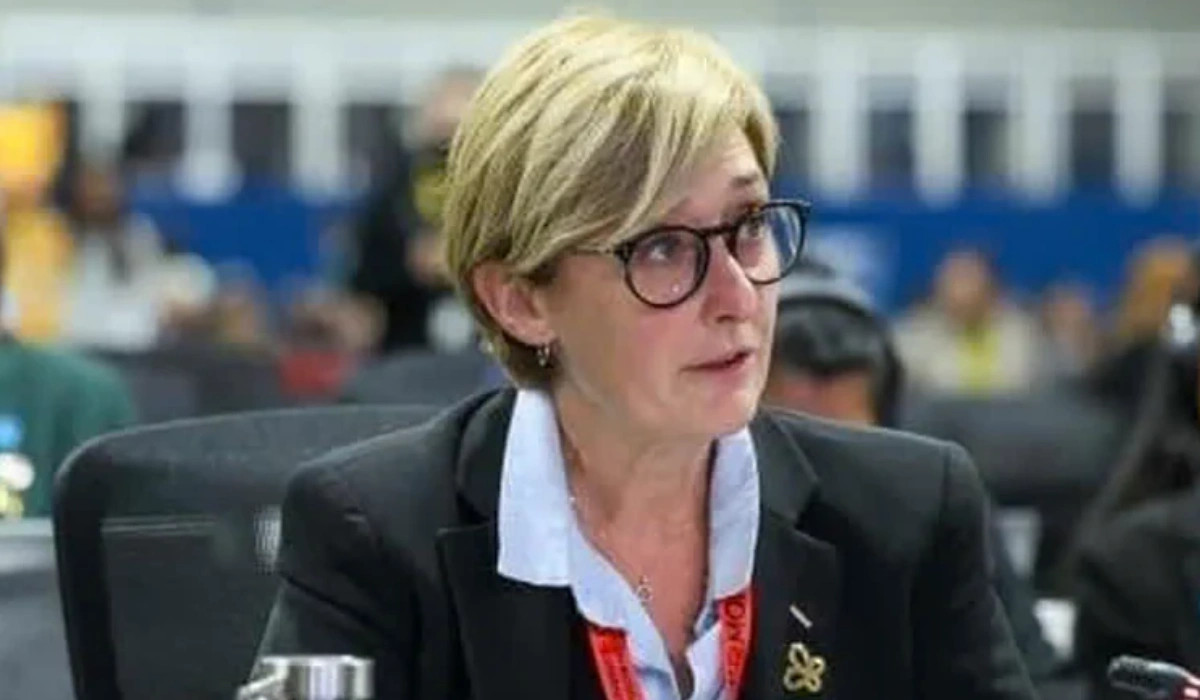
- Princely Government Commitment: Minister Céline Caron-Dagioni represented Monaco at the High-Level Segment of COP17 of the Convention on Biological Diversity in Yerevan, Armenia.
- Financial Pledge: Monaco committed to contributing €1.5 million to the Global Biodiversity Framework Fund (GBFF) between 2026 and 2030.
- Global Framework Support: The Princely Government reaffirmed its dedication to implementing the Kunming-Montreal Global Biodiversity Framework to reverse biodiversity loss.
- National Strategy Update: Monaco is actively updating its National Biodiversity Strategy through to 2030, covering both marine and terrestrial ecosystems.
- Call to Action: Minister Caron-Dagioni emphasized the urgent need to accelerate implementation and turn high-level international commitments into concrete environmental results.
Monaco (Monaco Weekly Newspaper) October 30, 2026 – The Principality of Monaco has pledged €1.5 million to the Global Biodiversity Framework Fund as part of its ongoing commitment to international environmental conservation. Speaking at the High-Level Segment of the 17th Conference of the Parties (COP17) to the UN Convention on Biological Diversity in Yerevan, Armenia, Monaco’s Minister of Public Works, the Environment and Urban Development, Céline Caron-Dagioni, delivered the Princely Government’s address. The multi-year financial pledge, scheduled for disbursement between 2026 and 2030, is designed to support international efforts to halt ecosystem degradation and implement the Kunming-Montreal Global Biodiversity Framework.
What pledges did Monaco make at the COP17 summit in Yerevan?
As reported by staff writers of Monaco Tales, Minister Céline Caron-Dagioni officially presented Monaco’s multi-year financial allocation during her address to world delegates at the COP17 High-Level Segment in Yerevan. As reported by Monaco Tales, Céline Caron-Dagioni stated that “It is now up to us to accelerate the implementation of the Global Framework and turn our commitments into concrete results”.
According to official press releases issued by the Princely Government of Monaco, the pledged funding of €1.5 million will be directed to the Global Biodiversity Framework Fund (GBFF) over the 2026–2030 period. The GBFF, established under the Global Environment Facility (GEF), acts as a primary international channel providing grants to developing nations, Small Island Developing States (SIDS), and Indigenous communities engaged in nature restoration and wild species preservation.
How is Monaco updating its national environmental policies?
Beyond its financial contributions, Monaco outlined its internal policy trajectory during the summit. As reported by Ad Astra Journal, Minister Caron-Dagioni highlighted the ongoing update of Monaco’s National Biodiversity Strategy through to 2030.
The updated domestic strategy focuses on concrete measures to protect both terrestrial habitats and marine ecosystems within the Principality’s territorial waters. The minister stressed that sustainable financing mechanisms remain critical to ensuring that national conservation programs and international biodiversity targets align effectively.
How does Monaco’s contribution fit into the broader COP17 multilateral agreements?
As reported by media officers at the Global Environment Facility (GEF), Monaco’s announcement formed part of a major international pledging session held during the Finance Day of COP17 in Yerevan. Total new multi-annual contributions exceeding $60 million were announced for the GBFF by a coalition of national and sub-national donors, including Germany, Iceland, Monaco, the province of Québec, and the city of Berlin.
In addition to the GBFF announcements, major financial pledges were recorded for the broader GEF-9 replenishment, with Spain committing €50 million, Uzbekistan contributing $4.5 million, and the United Kingdom reaffirming a pledge of £330 million.
Background of the Kunming-Montreal Global Biodiversity Framework and the GBFF
The Kunming-Montreal Global Biodiversity Framework (GBF) was formally adopted in December 2022 during COP15 in Montreal, Canada. The historical accord established 23 global targets for 2030, including the benchmark “30×30” initiative aimed at protecting at least 30 percent of the planet’s terrestrial, inland water, coastal, and marine areas by the end of the decade.
To operationalize the targets set in Montreal, the Global Biodiversity Framework Fund (GBFF) was launched at the Seventh GEF Assembly in August 2023. The fund was established specifically to mobilize and disburse new public, private, and philanthropic resources directly to nature conservation projects. The GBFF prioritizes funding allocation to developing nations, least developed countries, and SIDS, while mandating a target of 20 percent of programmed funds to directly support conservation actions led by Indigenous Peoples and local communities (IPLCs). Monaco’s €1.5 million allocation serves as a direct contribution toward fulfilling these international targets.
International Biodiversity Funding and Monaco’s Role
Monaco’s multi-year pledge of €1.5 million is predicted to strengthen the Principality’s position as a prominent voice in global environmental diplomacy, particularly regarding marine protection and micro-state conservation leadership.
For developing nations and Small Island Developing States (SIDS), predictable multi-annual donor contributions from nations like Monaco provide essential capital stability needed to plan long-term ecosystem restoration projects. The streamlined disbursement framework of the GBFF is expected to accelerate project approvals, allowing recipient countries to meet their 2030 National Biodiversity Strategies and Action Plans (NBSAPs).
Furthermore, Monaco’s contribution is expected to encourage other smaller high-income nations and sub-national governments to establish similar multi-year funding commitments. As negotiations continue through the conclusion of COP17, consistent public sector pledges are anticipated to build confidence among private and philanthropic investors, facilitating broader blended-finance partnerships necessary to close the global biodiversity financing gap.