- Monaco is introducing a new permanent mooring system off Larvotto Beach to protect its fragile marine environment from damage caused by uncontrolled superyacht anchoring.
- The infrastructure project will feature nine permanent moorings specifically designed to accommodate large vessels measuring between 50 and 90 metres.
- Under-sea construction works commenced on 7 October, spearheaded by Monaco-based maritime specialist Trasomar alongside French tech start-up LineUp Ocean.
- The anchoring mechanism relies on heavy concrete blocks situated roughly 70 metres below the sea surface, successfully preventing traditional anchors from dragging along the delicate seabed.
- The development incorporates six 3D-printed artificial reef structures built using eco-friendly materials that blend recycled oyster shells to encourage biodiversity.
- These engineered reef modules provide approximately 18 cubic metres of protective habitat space while occupying a modest footprint of 130 square metres on the ocean floor.
- The marine biological initiative focuses on restoring localized marine life, explicitly aiming to shelter spiny lobsters and essential filter-feeding organisms.
- Construction activities are targeted for completion before the end of 2026, contingent on weather conditions, with full operation set for summer 2027.
- Once operational, free anchoring outside these designated spots will be strictly banned across Monaco’s entire territorial waters, subject to exceptions during major maritime events.
- The project delivers a dual objective: bolstering marine ecosystem preservation while simultaneously upgrading safety standards and infrastructure for luxury yachts.
Monaco (Monaco Weekly Newspaper) November 10, 2026 – Executive Summary: Monaco has launched a major offshore environmental project aimed at mitigating marine degradation caused by luxury maritime traffic off Larvotto Beach. Spearheaded by local maritime engineering experts Trasomar in partnership with French ecological design firm LineUp Ocean, the initiative installs heavy-duty fixed mooring buoys alongside 3D-printed bio-receptors. Designed to accommodate superyachts up to 90 metres, the installation protects sensitive underwater flora, specifically endangered seagrass habitats. The project signals a decisive transition toward regulated maritime anchorage along the French Riviera, setting a strict regulatory precedent for ecological preservation within high-density luxury cruising hubs.
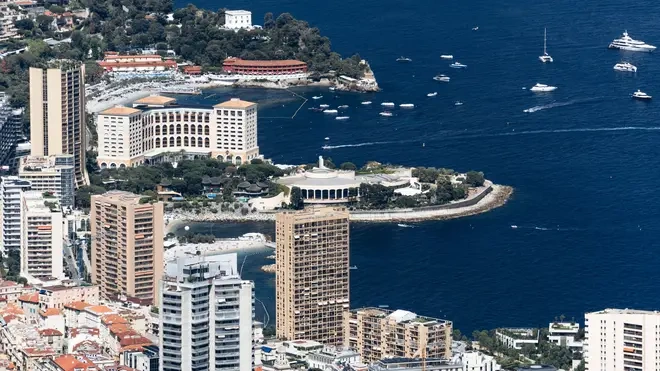
In an official public announcement detailing the environmental initiative, representatives from the Prince’s Government of Monaco confirmed that installation operations officially commenced on 7 October off the coast of Larvotto Beach. The strategic offshore development addresses long-standing ecological damage attributed to heavy maritime traffic, specifically the scouring of the seabed caused by large vessel anchors and heavy dragging chains. By engineering a fixed, controlled mooring infrastructure, the Principality aims to balance its standing as a premier global yachting destination with rigorous coastal environmental management.
As reported by maritime engineering correspondents, the project involves the deployment of nine heavy-duty permanent mooring buoys engineered to secure superyachts ranging between 50 and 90 metres in length. Rather than relying on traditional drop-anchoring mechanisms—which rip up seabed structures during deployment and retrieval—vessels will tether directly to pre-installed, high-capacity mooring lines. This fixed framework eliminates physical friction against the ocean floor, ensuring that visiting luxury vessels can maintain stable berthing without disturbing fragile benthic ecosystems.
The physical execution of the underwater assembly is being carried out by Trasomar, a prominent Monaco-based marine and hyperbaric construction firm, in technical collaboration with LineUp Ocean, an innovative French ecological engineering start-up. According to technical briefs released by the engineering teams, the anchoring assembly utilizes heavy concrete seabed blocks positioned at depths of approximately 70 metres. These massive submersion blocks act as stationary counterweights, holding the surface buoys in place and keeping heavy tension lines elevated well above sensitive seabed terrain.
Parallel to the installation of the mooring anchors, the project incorporates an ambitious bio-restoration component featuring six custom-built artificial reef modules. Manufactured using cutting-edge 3D-printing technology, these eco-engineered structures utilize specialized concrete mixtures integrated with recycled oyster shells. As highlighted by environmental researchers involved in the design phase, the chemical composition and textured surface of the oyster-shell matrix mimic natural calcium carbonate formations, providing ideal settlement substrates for native marine fauna.
Despite occupying a small physical footprint of just 130 square metres on the seabed, the intricate, multi-layered design of the six 3D-printed reef modules creates approximately 18 cubic metres of complex structural habitat. Marine biologists involved in the initiative emphasize that these micro-caves and crevices are explicitly optimized to host vulnerable indigenous species, including spiny lobsters, micro-crustaceans, and various filter-feeding organisms vital to maintaining local water clarity and ecological balance.
According to the project timeline outlined by the maritime authorities, underwater construction, concrete anchoring, and reef positioning are projected to conclude before the end of 2026, assuming favorable sea state and weather conditions. Following a series of rigorous safety tests and structural integrity inspections during the winter and spring months, the nine superyacht moorings are scheduled to become fully operational for visiting yachts in the summer of 2027.
Once the new infrastructure goes live in 2027, Monaco’s maritime authority will enforce strict regulatory changes across its maritime boundary. Anchoring outside designated mooring zones will be strictly prohibited across the entirety of Monaco’s territorial waters. Officials noted that limited, highly regulated exceptions to this anchoring ban will only be granted under special administrative arrangements during major international maritime spectacles, such as the annual Monaco Grand Prix and the Monaco Yacht Show.
Why Is Monaco Implementing Permanent Moorings Off Larvotto Beach?
The decision to install permanent superyacht moorings off Larvotto Beach stems from decades of cumulative environmental monitoring highlighting the severe impact of heavy anchor drop on Mediterranean coastal waters. As one of the world’s highest-density hubs for luxury yachting, Monaco experiences intense vessel congestion, particularly during the peak summer season and high-profile international events.
When large superyachts cast traditional anchors, the combination of multi-ton steel anchors and heavy ground chains dragging across the ocean floor causes severe physical scouring. This mechanical destruction wreaks havoc on Posidonia oceanica, an endemic Mediterranean seagrass species often referred to as “the lungs of the Mediterranean.” Posidonia meadows grow at extraordinarily slow rates—often less than a few centimetres per year—meaning anchor damage sustained in a single afternoon can take centuries to naturally recover.
By installing high-capacity, permanent mooring buoys linked to stationary seabed foundations, Monaco effectively eliminates the need for vessels to drop ground gear into sensitive biological zones. The initiative directly supports the Principality’s broader environmental mandates to halt biodiversity loss, stabilize coastal ocean beds, and preserve water quality along its heavily utilized coastline.
How Do 3D-Printed Oyster Shell Reefs Restore Marine Life?
The integration of 3D-printed artificial reefs into the mooring field represents a novel approach to combining maritime infrastructure with active biological restoration. Traditional concrete ocean structures often struggle to attract local marine life due to smooth surfaces and toxic chemical leachates present in standard industrial cement mixtures.
To overcome these barriers, French start-up LineUp Ocean engineered custom biological concrete formulations that incorporate crushed, recycled oyster shells. This material choice provides a twofold benefit: it repurposes organic waste from the seafood industry and yields a chemically hospitable, calcium-rich surface that encourages micro-organisms and larval marine life to attach and colonize.
Furthermore, 3D-printing manufacturing allows engineers to design complex internal geometries that closely replicate natural underwater rock formations, featuring precise overhangs, internal chambers, and varied cavity sizes. These structural features provide critical shelter for juvenile fish, spiny lobsters, and encrusting filter-feeders like sponges and bivalves. As filter-feeding organisms establish themselves across the 18 cubic metres of available artificial habitat, they actively strain organic particles from the water column, enhancing localized water transparency and fostering a healthier ecosystem surrounding the mooring installation.
What Are the Regulations and Operational Deadlines for Yacht Captains?
For yacht captains, management companies, and charter brokers, the project introduces both immediate construction advisories and upcoming regulatory mandates:
- Construction Period (October 2026 – Late 2026): Maritime operations led by Trasomar are active off Larvotto Beach. Captains are advised to observe local nautical notices, maintain appropriate safety distances from heavy crane barges and diving support vessels, and monitor local VHF marine channels for navigation updates.
- Testing and Commissioning (Early 2027): Following physical installation, the anchoring foundations and buoy moorings will undergo strain testing, underwater drone inspections, and load verification to ensure compliance with international safety standards for vessels up to 90 metres in length.
- Operational Launch (Summer 2027): The nine permanent moorings will officially become open for commercial and private superyacht reservation. Detailed booking protocols and usage guidelines will be published by Monaco’s port authorities prior to the summer charter season.
- Territorial Anchoring Prohibition (Summer 2027 Onward): Unrestricted dropping of traditional anchors will be illegal throughout Monegasque territorial waters. Captains violating the ban outside designated emergency zones or permitted event corridors will face administrative penalties and maritime fines enforced by the Monegasque Marine Police.
Background of the Larvotto Beach Marine Protection Project
The installation of the Larvotto superyacht mooring system is part of Monaco’s long-standing commitment to coastal marine conservation, established under the direction of Prince Albert II and the Prince Albert II of Monaco Foundation. The coastal waters off Larvotto Beach have historically formed part of Monaco’s network of Marine Protected Areas (MPAs), which were created to safeguard the narrow coastal strip’s unique sub-aquatic biodiversity.
For decades, the Mediterranean basin has faced escalating pressure from maritime tourism, coastal urban development, and intense yachting traffic. Posidonia oceanica meadows, which cover vast stretches of the Mediterranean seabed, act as critical carbon sinks, coastline stabilizers, and nursery grounds for over 20% of all Mediterranean marine species. Recognizing that traditional anchoring presented an existential threat to these slow-growing meadows, French and Monegasque regulatory bodies gradually tightened coastal regulations over the past decade, restricting free anchoring for large vessels along vulnerable sectors of the Côte d’Azur.
The Larvotto project builds upon previous experimental eco-mooring installations tested across the French Riviera. However, Monaco’s approach marks a significant technological advancement by directly integrating heavy-duty superyacht infrastructure (handling vessels up to 90 metres) with active bio-receptive reef technology. By commissioning local specialized marine contractor Trasomar—which has managed underwater civil engineering in Monaco since 1994—and environmental innovator LineUp Ocean, the Principality has created a scalable model designed to demonstrate that high-end maritime tourism and stringent environmental protection can coexist within high-density coastal regions.
How This Development Will Affect Key Stakeholders
The introduction of Monaco’s permanent mooring system and the accompanying territorial anchoring ban will trigger widespread structural shifts across several distinct stakeholder groups:
1. Superyacht Captains, Owners, and Charter Operators
The transition from free anchoring to a fixed mooring system fundamentally alters operational logistics for large yachts visiting Monaco. Captains of vessels between 50 and 90 metres will benefit from enhanced berthing security, as heavy concrete anchor blocks set at 70-metre depths eliminate the risk of anchor dragging during sudden Mediterranean squalls. However, the strict prohibition of uncontrolled anchoring will require charter brokers and captains to reserve mooring spots well in advance during peak summer months. Vessels unable to secure one of the nine permanent moorings or a berth inside Port Hercule or Fontvieille will be forced to anchor further offshore in deeper international waters, altering tender transfer logistics for high-net-worth guests.
2. Local Marine Ecosystems and Environmental Researchers
Coastal marine life off Larvotto Beach is poised for substantial ecological recovery. The immediate elimination of anchor scouring will allow existing Posidonia oceanica beds to stabilize and slowly expand without constant mechanical disruption. Concurrently, the addition of 18 cubic metres of 3D-printed artificial reef habitat will accelerate localized biodiversity gains. Marine biologists predict a noticeable rise in local populations of spiny lobsters, rocky-reef fish, and encrusting marine organisms within two to three years of deployment. The project will also serve as a live laboratory for oceanographers monitoring the efficacy of oyster-shell concrete in marine habitat restoration.
3. The Broader Riviera Yachting Economy and Regional Port Authorities
Monaco’s decisive move is expected to accelerate a regulatory domino effect across neighboring Mediterranean destinations. As Monaco establishes a zero-tolerance policy for unregulated anchoring, neighboring coastal jurisdictions along the French Riviera and Italian Ligurian coast are likely to adopt identical eco-mooring mandates. This shift will drive increased capital investment into eco-designed maritime infrastructure across the region, creating commercial opportunities for marine engineering firms, eco-materials manufacturers, and underwater construction companies. Ultimately, the project establishes a new operational benchmark for global luxury destinations, proving that sustainable marine management is becoming a mandatory prerequisite for hosting the international superyacht fleet.